
Working hrs & Fees
Mon–Fri 10am–5pm – £60
Mon 5pm–7pm – £80
Employer Funded : £100
Single Session Therapy: £90
Relationship Problems Therapy for Women In South London & Online
Welcome to a space where you can slow down, breathe, and feel supported. Here, you are invited to show up exactly as you are, without pressure or expectation. This is a calm, supportive space for women who may be feeling overwhelmed, anxious, disconnected, or emotionally exhausted, a place where you can feel heard, understood, and gently supported.
How to build healthy habits and daily routines for stress relief
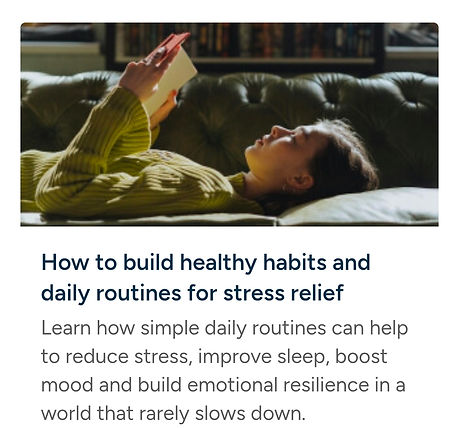
Mental well-being can feel fragile in a world that rarely slows down. Many people seeking counselling support describe feeling overwhelmed, distracted or emotionally drained. While therapy offers valuable space to explore these experiences, small daily routines can also play a powerful role in reducing stress and strengthening mental resilience.
Why daily routines matter for mental health
Establishing consistent healthy habits can create a foundation that helps manage stress, improve mood, and boost overall mental resilience. Daily routines provide structure, which can reduce feelings of chaos and uncertainty.
Implementing routines and positive habits that support mental well-being can lead to:
-
better sleep regulation
-
reduced anxiety symptoms
-
improved mood stability
-
increased emotional resilience
-
stronger stress management skills
How to create a healthy daily routine
Creating a routine involves small, manageable habits that fit naturally into your day. Here are some examples:
Consistent sleep schedule
Going to bed and waking up at the same time every day, including weekends, can help regulate your body's internal clock. This improves sleep quality, which is crucial for mood regulation and cognitive function.
Morning mindfulness or meditation
Spending just 5 to 10 minutes focusing on your breath or practising mindfulness can reduce stress and increase emotional resilience throughout the day.
Regular physical activity
Exercise releases endorphins, which are natural mood boosters. Even a short walk or stretching session can improve mental clarity and reduce anxiety.
Balanced nutrition
Eating regular, nutritious meals supports brain health. Avoiding excessive sugar, alcohol and caffeine can prevent mood swings and energy crashes.
Journaling or daily reflections Writing down your thoughts and feelings helps process emotions and identify stress triggers. It also encourages gratitude, which is linked to improved mental health.
Digital boundaries
Limiting time spent scrolling news or social media can reduce comparison, overstimulation and anxiety. Setting specific times to check your phone or creating tech-free zones in your home can support mental clarity.
Time outdoors
Spending time in natural light helps regulate sleep patterns and boost mood. Even a short walk in a local park can reduce stress levels and improve focus.
Create a structured start to the day
Rather than immediately checking emails or social media, begin your day with intention. This could be stretching, making your bed, enjoying a quiet cup of tea, or setting a simple intention for the day. A calm start can reduce reactive stress responses.
Schedule regular breaks
Taking short breaks throughout the day helps regulate stress levels. Even standing up, stretching, or stepping outside for fresh air can reset your focus and reduce mental fatigue.
Limit multitasking
Trying to do multiple things at once can increase cognitive overload and anxiety. Focusing on one task at a time often improves productivity and reduces overwhelm.
Building emotional awareness within your routine
Routines are not only about behaviour, but they are also an opportunity to check in with yourself emotionally. Taking a few minutes to acknowledge your emotional state can prevent feelings from building up unnoticed. Over time, this strengthens self-awareness and emotional regulation skills.
You might ask yourself:
-
How am I feeling today?
-
What do I need right now?
-
Is there something I’ve been avoiding?
Strengthen social connection
Spending time with people who feel safe and supportive can make a real difference to your mental well-being. Even a short chat with a friend, a catch-up over coffee, or a walk with a family member can help ease stress and remind you that you’re not on your own.
When we feel heard and understood, it naturally helps regulate our emotions. Sharing worries out loud often makes them feel lighter, and positive connections can lift your mood in a way that’s hard to achieve alone. Community groups, local classes or support networks can also offer a sense of belonging, which is especially important during periods of anxiety or low mood.
How to start and maintain your routine
Starting a new routine can feel challenging. The key is to begin with small steps, build gradually and be consistent. Here are some tips to help you do just that:
-
Choose one habit at a time: Focus on one new habit until it becomes automatic before adding another.
-
Set clear, realistic goals: Instead of vague goals like "exercise more," aim for "walk 10 minutes after lunch."
-
Use reminders: Link new habits to existing routines, such as meditating right after brushing your teeth.
-
Be flexible and kind to yourself: Life happens, and missing a day is normal. Avoid self-criticism and simply return to your routine.
-
Track your progress: Use a journal or an app to note your habits. Seeing progress can motivate you to keep going.
Everyone’s life is different, and routines should fit your unique needs and preferences. If mornings are hectic, try a calming evening routine instead, or for busy schedules, break habits into shorter sessions, like 5-minute stretches. Adapting routines to your lifestyle can help you maintain them realistically.
The impact of routine on stress and anxiety
Stress and anxiety often come from feeling overwhelmed or feeling out of control. Routines help by creating predictability and reducing the number of decisions you need to make daily. This lowers mental fatigue and frees up energy to handle unexpected challenges.
For example, having a calming bedtime routine signals your body to relax, making it easier to fall asleep and reducing night time anxiety. Similarly, a morning routine that includes mindfulness can set a positive tone for the day.
Over time, these small, consistent habits can create a steadier foundation for managing stress and supporting your overall mental well-being.